For Ar*’s Sake (Part II)
A Treatise on Aesthetics (Part II)

Against Inquisition
One of the GOATs of the literary essay, Susan Sontag, had a lot to say on the matter. In her revolutionary essay, “Against Interpretation,” she argued that art need not contain hidden meanings, and the point of engaging is not to uncover what it’s all about. Instead, it should be thought of as a sensual experience, like food, going on a drive with the top down, or sex. What does it feel like to view it, read it or listen to it? That’s my interpretation at least (pun intended).
“The fact is, all Western consciousness of and reflection upon art have remained within the confines staked out by the Greek theory of art as mimesis or representation. It is through this theory that art as such—above and beyond given works of art—becomes problematic, in need of defense. And it is the defense of art which gives birth to the odd vision by which something we have learned to call “form” is separated off from something we have learned to call “content,” and to the well-intentioned move which makes content essential and form necessary.”
-Susan Sontag, Against Interpretation

This split is problematic because it assumes a bifurcation of artistic intent. It assumes the artist regards each work she creates as a composite of two individual components: content and form. While content more or less has to do with what the work tries to communicate, form is predicated on style as much as the overall structure of the piece. The unfortunate reality of which Sontag is speaking is that whether a work of art is a realistic representation, or an abstract expression, the questions remain the same: what does it mean, what is its purpose, what is its content?
However, content and form can be one and the same. Art doesn’t need to harbor an intrinsic meaning. The form, being the style or structure, implies meaning in itself through the sensory experience it provokes and its inherent existence. That’s what Gass maintained regarding the role of literary language, and I believe that’s the argument Sontag begins to put forth dialectically.

Before this, however, she shows that the issue transcends bifurcation, or the divorced function of “form” and “content”, and comments on the larger problem: the hierarchy historically placed on one over the other, dictating not only which should be prioritized with respect to creation, but also with respect to engagement:
“Even in modern times, when most artists and critics have discarded the theory of art as representation of an outer reality in favor of the theory of art as subjective expression, the main feature of the mimetic theory persists. Whether we conceive of the work of art on the model of a picture (art as a picture of reality) or on the model of statement (art as the statement of the artist), content still comes first.”
-Susan Sontag, Against Interpretation

As a writer and photographer, I can attest that this is extremely annoying. It creates a toxic relationship between the artist and the act of creating, where they feel they must answer a question about their work, which in many cases hasn’t even been asked yet. Not only is it stifling, but it leads to stale work, at least for me.
There are times when I get so tired of thinking about how the invisible audience will respond to what I’m creating that I begin to break every single rule that constitutes a logical approach. I shoot photos that lack a clear subject, where lines sometimes appear hardly to exist; I write what any good critic would consider “purple prose” because it doesn’t really say anything at all, so burdened by descriptive nonsense it is, with mixed metaphors and all that stuff, or whatever.
There was a period of my life when I stopped reading novels to understand. I’ve oscillated back and forth with this approach, depending on what I’m reading. For more avant-garde works, like Marguerite Duras’s The Malady of Death and other gems from the Nouveau Roman movement, and even some Richard Brautigan stuff, like Trout Fishing in America and In Watermelon Sugar (an all-time favorite of mine), I aim to experience the work as if my mind is a drive-in theater, and I’m there just watching the scenes unfold.
Even if the mental image it provokes is mixed up or confusing, the point is that it results in a vivid thought, an intense feeling. That’s not to say there is no “content,” or meaning, but those works mean so much more to me than that (see what I did there).
“Interpretation does not, of course, always prevail. In fact, a great deal of today’s art may be understood as motivated by a flight from interpretation. To avoid interpretation, art may become parody. Or it may become abstract. Or it may become non-art.”
-Susan Sontag, Against Interpretation

And this is where Pollock and Abstract Expressionism come in, as well as many other great movements, such as Rothko and Color Field Painting, Charles Olson and Projective Verse Poetry, some of the more avant-garde deconstructed prose of Samuel Beckett, like The Unnamable, and the dreamy unconventional cinema of Alain Resnais, particularly The Last Year at Marienbad, which just so happened to be penned by Nouveau Roman’s own Alain Robbe-Grillet.
Over the last hundred years, there have been so many artistic movements, so many artists setting out to see just how far they could take their respective mediums, that there are no shortage of examples of trailblazers avoiding, or rather escaping interpretation. Those who solely seek to interpret mistakenly assume that finding meaning is the ultimate goal. Perhaps they do this because it’s human nature to try to make sense of it all by finding some hidden meaning. But why should one’s creation be conflated with another’s existential pursuit?
Personally, I don’t want my work to be engaged with if that’s the ultimate goal. Maybe that’s arrogant, or ignorant in the way that it ignores any notion of audience altogether, but that’s not the point. I bring my art into the world, like parents bring their children into the world, by having a bit of fun. Sometimes it’s by accident and other times it’s on purpose, but at the end of the day, I just want to put something out there I can be proud of. And if it leaves a positive impression, I have even more reason to be proud. The simple fact that a piece of me exists on its own out there is why I do it.
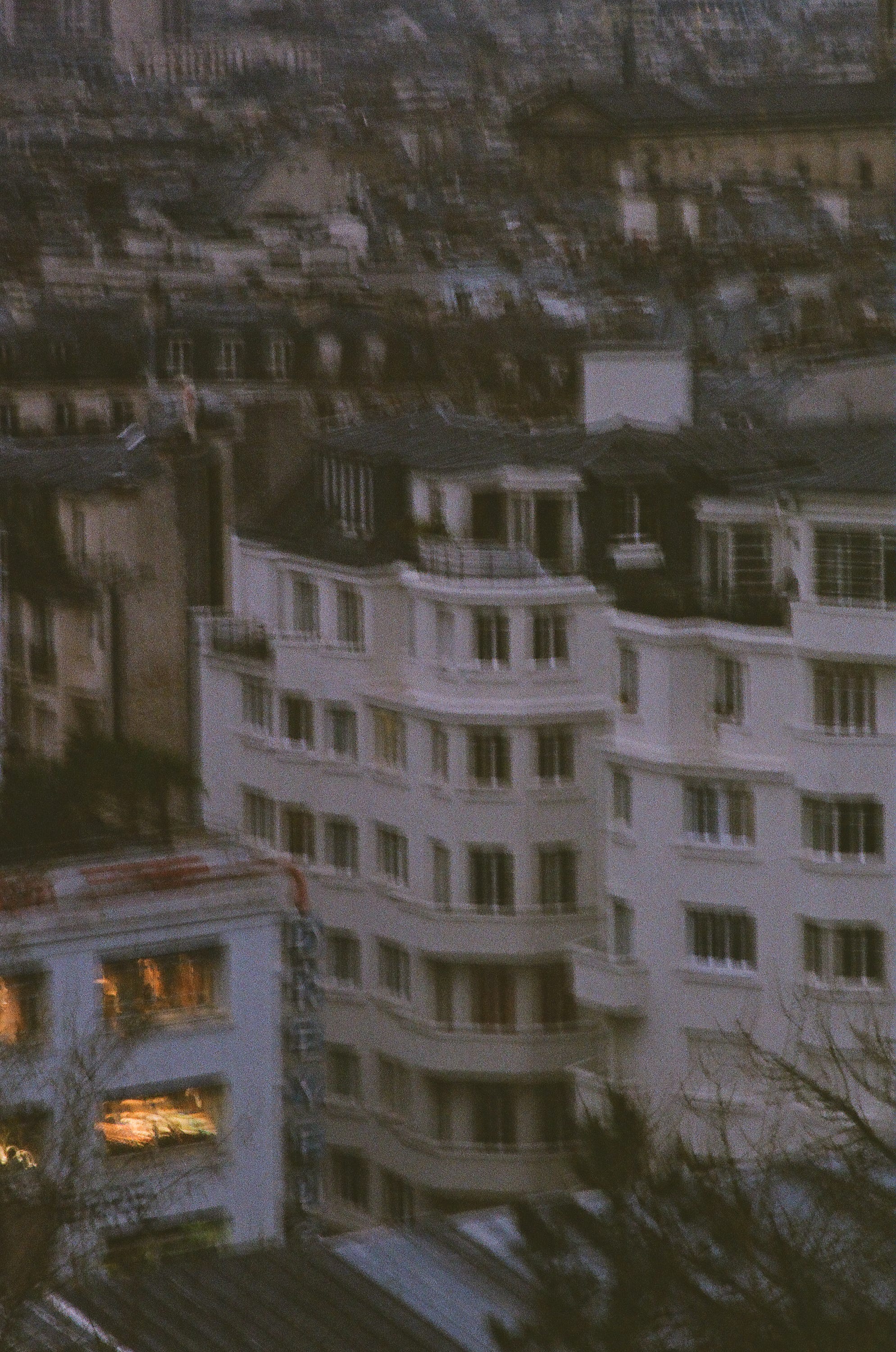
And not everything in life needs to be outcome oriented. There’s a real argument to be made that many artists create simply because the act of creating brings a level of balance to their lives that otherwise wouldn’t be there.
“What is important now is to recover our senses. We must learn to see more to hear more, to feel more.
Our task is not to find the maximum amount of content in a work of art, much less to squeeze more content out of the work than is already there. Our task is to cut back content so that we can see the thing at all.”
-Susan Sontag, Against Interpretation
Keep in mind that this was published in 1964, during the emergence of postmodernism, abstract art, the avant-garde, and arthouse cinema. Since then, there has been a return to content and easy-to-follow messaging that usually serves a higher purpose than aesthetics, whether that be social commentary or an appeal to get humanity to reengage with its morality.
Art as a Vessel
Since the publication of Sontag’s landmark essay, new approaches to literature have emerged, such as the New Sincerity Movement, a revolt against postmodernism’s revolt against the sententious works of the 19th century. From my understanding, this marked a return to meaning-oriented work that moved away from abstraction and opacity. With this general shift came greater value placed on art that serves a purpose.
Much of today’s art seeks to break the chains of marginalized groups and eradicate the long, unfair tradition of literary inequality perpetuated by the ubiquitous white-male voice that has dominated the novel for hundreds of years.
While this is not only understandable, but necessary, has there been too much emphasis on art as a means for change? Has the pendulum swung too far, where both utilitarian works, developed to stoke social change, and more experimental works, created to shatter boundaries, cannot coexist among literary critics and academia, who decide what gets awarded, promoted and taught?

There was a time when the prevailing literature did both. Just read the first few pages of Emile Zola’s landmark social realist novel Germinal, constructed with poetically attractive language, but convincingly communicating the labor struggles of the economically disadvantaged. Dostoevsky did this as well with Demons, and its harsh depiction of a socialist revolution gone wrong, and if you want something that straddles the avant-garde, postmodern way of critiquing government, look no further than Vladimir Sorokin’s Blue Lard, or his short story collection, The Red Pyramid and Other Stories. And those are just a few examples. Then of course there are the legendary works that came from black authors depicting inequality and racial injustice, such as James Baldwin’s bibliography, Ralph Ellison’s Invisible Man and Toni Morrison’s greatest novels, most notably The Bluest Eye and Beloved, praised by William Gass, who famously labeled her work “operatic realism.”
Today, however, specifically in the U.S., I feel as though artistically daring work isn’t given the same spotlight as work that clearly, and often plainly, articulates important messages surrounding our country’s most pressing issues.
To be fair, we have a lot that needs to be talked about in an easy-to-comprehend, digestible fashion, because, after all, we don’t want the message to get lost or the efficacy to be diminished, but not only are there many avenues to incite social change, and believe me, I’m not saying art isn’t one, but I’m not sure it needs to be treated as the sole vessel, and if it is used that way, does the aesthetic edge need to be dulled?
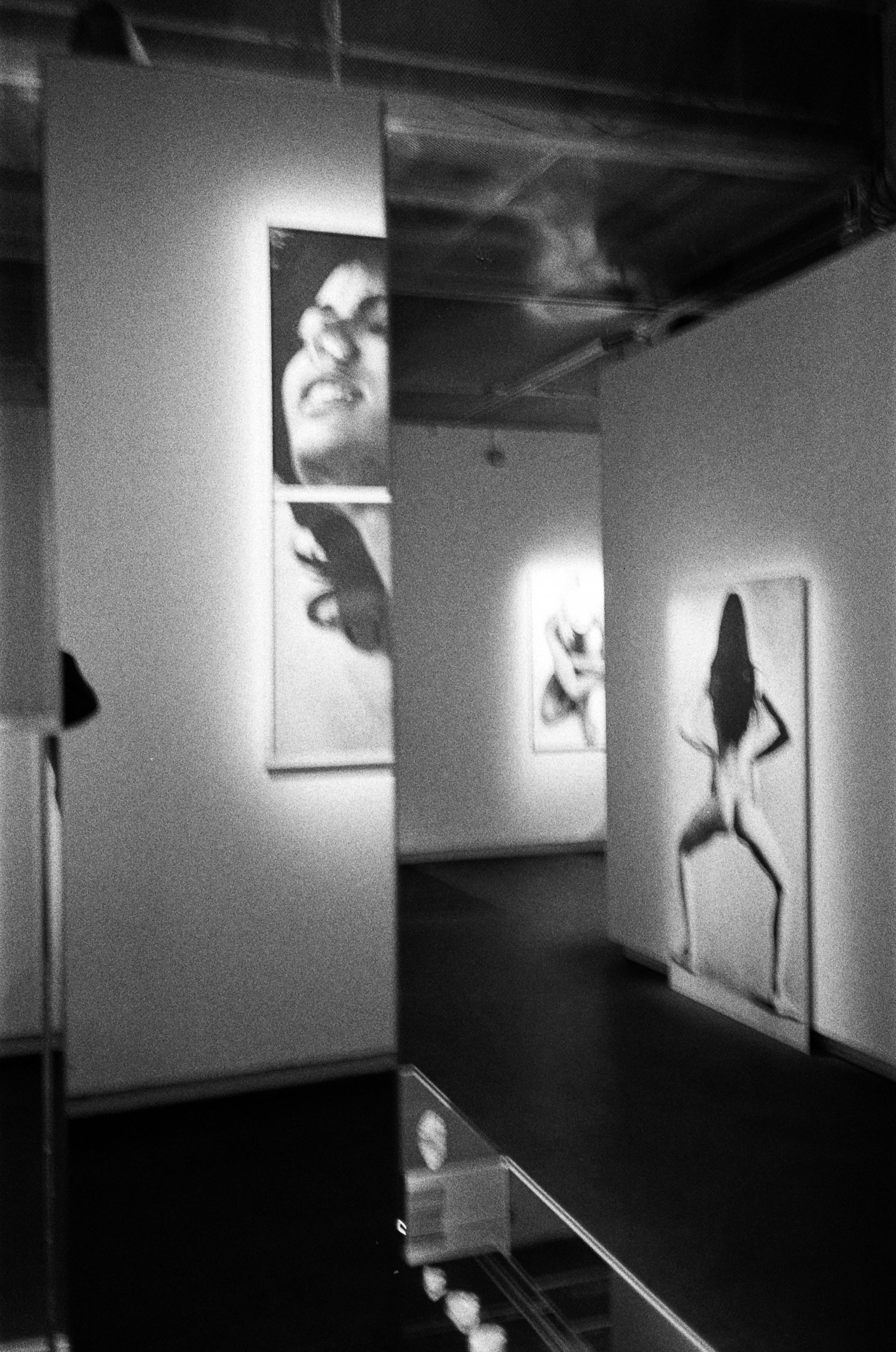
Permission to Exist
I personally believe art should be allowed to exist regardless of content. It should be celebrated for its beauty, even if that’s all it has to offer.
The poetry, the novels, the photography, the music, the movies, the paintings, none of it has to “mean anything” for me to enjoy it. There doesn’t need to be a message. I’m fully aware that for others that may not be the case. And to each their own. But anyone who participates in this thing we call artistry knows it’s primarily about how the thing makes you feel. Whether you feel good, bad, happy, sad, enlightened, stupid, confused, the point is it affected you, dare I say moved you.
I want things that move me, not things that feel repetitive because repetition erodes impact. The more we experience something the same way with the same “message” is, frankly, the less moving it is, and perhaps even the less memorable. If the sensual impact is lost, it no longer results in that “special feeling” that only art is capable of producing.
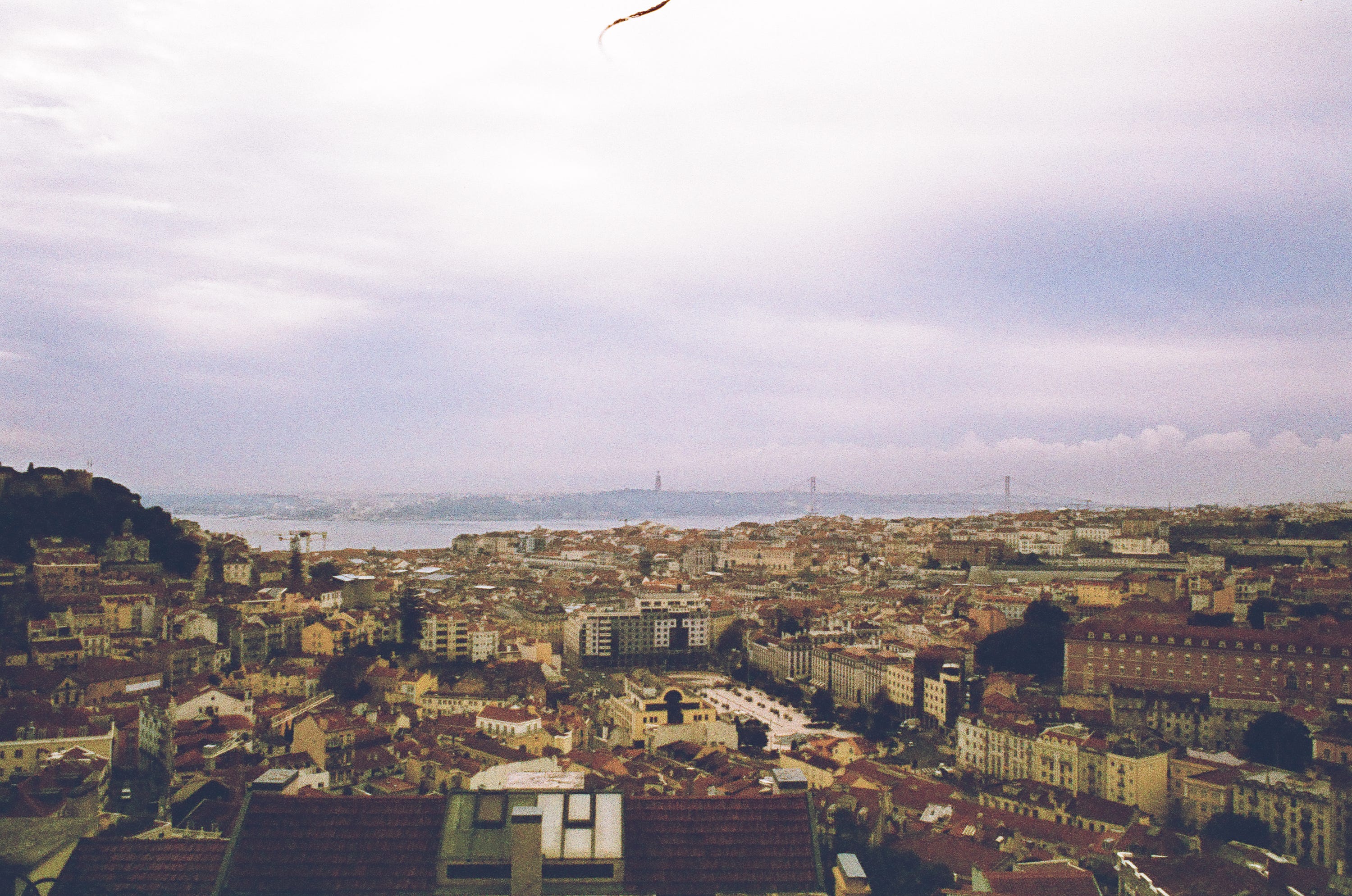
You may not care, but I’m going to continue creating things that I believe are beautiful because they make me feel something. There will likely never be a hidden agenda or explicit message. My only hope is that people look beyond meaning, stop trying to interpret it and simply just experience it.
I hope artists continue to push boundaries and inspire others to pursue new frontiers they didn’t know existed. Without that, art stops being art. I also hope the world becomes a better place, but it shouldn’t come at the expense of experimentation and innovation.